
Our Mission
is to walk alongside neurodivergent individuals and families, offering respectful educational advocacy, behavior-informed support, and meaningful opportunities for connection, belonging, and community.
Why Roots and Wings Exists
Roots and Wings Neurodivergence Support Network exists to support neurodivergent individuals and families as they navigate education systems, homeschooling pathways, daily life, and community connection — without requiring them to be “fixed,” normalized, or pathologized.
We provide non-clinical educational advocacy, behavior-informed support, systems navigation, and social connection, grounded in lived experience, respect for neurodivergent nervous systems, and a deep understanding of how educational and support systems operate.
Roots and Wings was created to meet a gap many families encounter: support that sits between systems. Families are often asked to coordinate complex educational plans, interpret evaluations, attend meetings, and make educational decisions — including transitions to or within homeschooling — all while managing stress, burnout, and misunderstanding. Our role is to walk alongside families, help translate systems, and reduce the burden of navigating those processes alone.
Our approach is collaborative, regulation-centered, and strengths-based. We focus on understanding behavior through the lens of nervous system needs, environment, and unmet supports, rather than compliance or control. We believe meaningful support begins with safety, predictability, and respect.
A core focus of Roots and Wings is building and connecting neurodivergent homeschool communities. We create opportunities for families and individuals to connect with one another through peer groups, social gatherings, and shared experiences that honor different learning styles, energy levels, and support needs. These spaces are designed to foster belonging, mutual understanding, and authentic connection — without pressure to perform or conform.
Roots and Wings Support Network does not provide medical, psychological, or therapeutic services. We do not diagnose or treat. Instead, we offer informed support, advocacy, and guidance to help families access, understand, and navigate the systems and communities around them.
At its core, Roots and Wings is about helping individuals stay rooted in who they are — while being supported to grow, explore, and connect in ways that feel safe, sustainable, and affirming.
Our Principles
●
Neurodivergence Is Not a Deficit
We affirm neurodivergent ways of thinking, learning, and relating as natural variations of the human experience. Support begins with respect, not correction.
●
Regulation Comes Before Expectation
We understand behavior as communication shaped by nervous system needs, environment, and context. Safety, predictability, and connection are the foundation for growth.
●
Families Deserve Clear, Compassionate Support
Navigating education systems and homeschooling paths can be overwhelming. We believe families deserve guidance that is transparent, collaborative, and grounded in real-world experience.
●
Belonging Matters
Connection and community are essential. We intentionally create spaces where neurodivergent individuals and families can connect, participate, and belong without pressure to conform.
Meet the Family Behind Roots and Wings
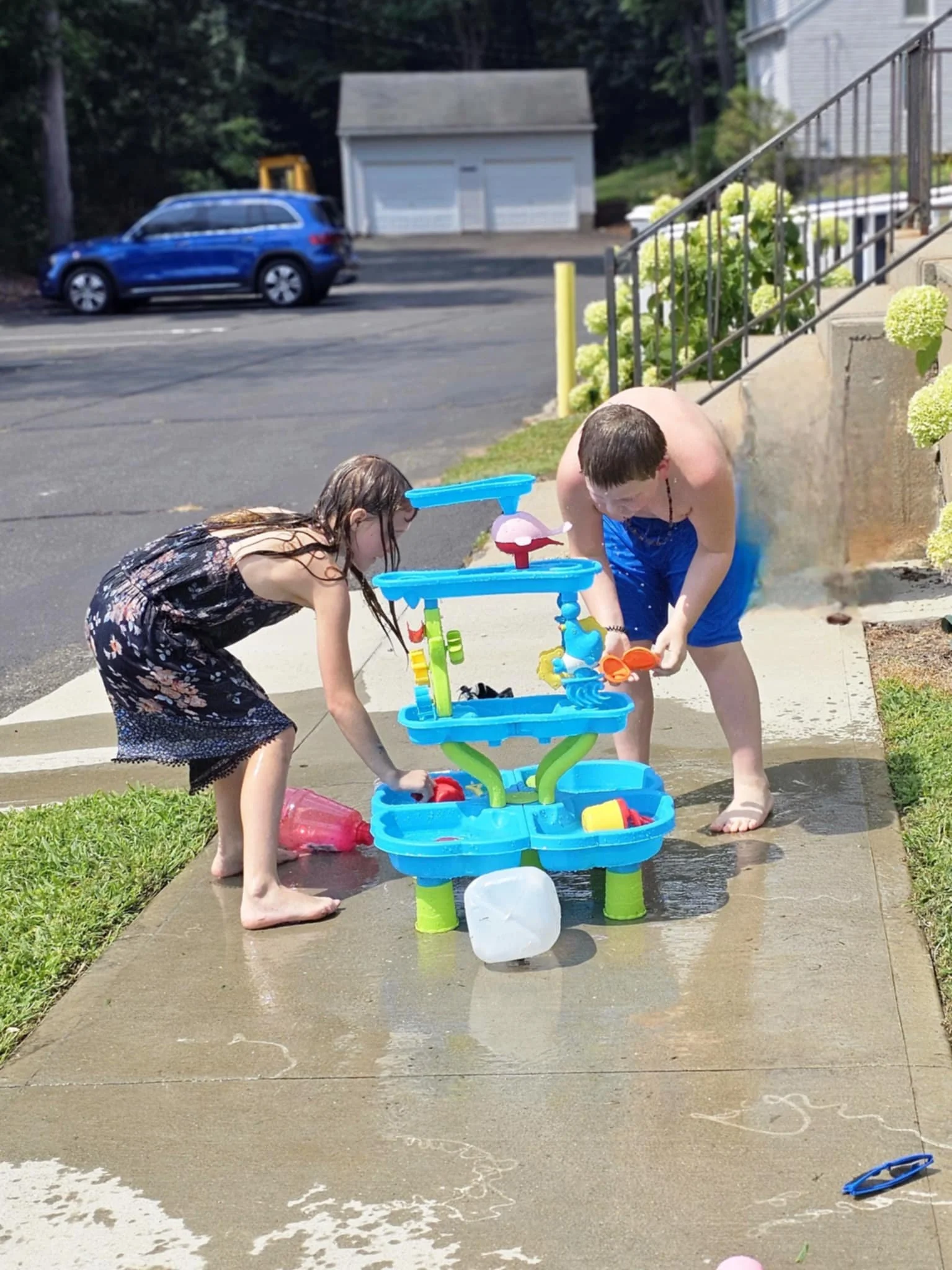
This work is personal for us because it comes directly from our own family.
I am a neurodivergent parent raising two neurodivergent kids with very different needs, strengths, and nervous systems. One of my children is driven by movement, sound, and connection — always in motion, always talking, always seeking engagement. The other is more rigid and rule-oriented, needing quiet, predictability, and a strong sense of control to feel safe. What helps one child regulate can completely overwhelm the other, and much of our daily life is spent navigating that balance.
Our home is full of motion, looping conversations, intense interests, strong reactions to transitions, and frequent regulation challenges. Learning rarely happens sitting still. It happens while pacing, building, talking things through out loud, listening to the same audio on repeat, or stepping away entirely when things become too much. We plan our days around energy limits, sensory needs, and emotional recovery — not around what learning is “supposed” to look like.
Our journey through education included years of meetings, evaluations, and accommodations that sounded reasonable but didn’t work in practice. We spent a lot of time explaining our children to systems that didn’t fully understand them. Homeschooling became part of our life not because it was a goal, but because it allowed our kids to learn in ways that matched who they actually are.
As a parent, I live inside the daily work of co-regulation — supporting big emotions, helping kids recover after overwhelm, repairing when things go wrong, and learning alongside them. I know firsthand how isolating this can feel, and how hard it is to find support that understands neurodivergence as lived experience, not just theory.
Roots and Wings exists because this is our family’s reality. It reflects the kind of support and community I was looking for — practical, respectful, non-clinical, and grounded in real life with neurodivergent kids.
Experience
My work is grounded in more than two decades of lived, professional, and observational experience supporting neurodivergent children and their families across home, school, and community settings.
I have spent over 20 years living alongside children with diverse neurodevelopmental profiles, supporting emotional regulation, sensory needs, learning differences, and behavioral challenges in real-world contexts. This time has included close collaboration with families, educators, and allied professionals, with a focus on understanding how environment, expectations, and nervous system demands shape behavior and learning.
Through this lived experience, I am able to offer informed support and perspective to families navigating school placement, homeschooling decisions, transitions, and complex support needs. My approach emphasizes observation, pattern recognition, and practical problem-solving — helping families make sense of what they are seeing and identify supports that fit their child and their household, rather than forcing compliance or one-size-fits-all solutions.
As a physically disabled person, I have also spent decades navigating the complex systems and requirements that entails. As a result, I bring firsthand experience supporting families with the organizational and documentation demands that often accompany access to services. This can include helping families gather, organize, and understand materials related to prior authorizations, insurance-related paperwork, and supporting documentation. This support is informational and organizational in nature and is intended to reduce burden and confusion for families navigating complex systems.
My experience includes:
Supporting families through IEP and 504 processes and school collaboration
Helping parents interpret evaluations, reports, and educational recommendations
Identifying environmental and sensory mismatches that impact regulation and learning
Supporting transitions, demand avoidance, shutdowns, and overwhelm
Assisting with homeschool and hybrid learning planning
Supporting communication and information-sharing between families, schools, and providers
Supporting organization and understanding of insurance-related and authorization documentation
Providing guidance grounded in neurodiversity-affirming, regulation-centered frameworks
My background includes formal study in psychology, graduate-level coursework in counseling, and extensive applied experience in child development, neurodivergence, and family systems. While I do not provide clinical or therapeutic services, my work is informed by long-standing engagement with neurodiversity-affirming research and practical frameworks focused on collaboration, emotional regulation, and environmental fit.
At Roots and Wings, this experience shows up as informed support that is thoughtful, respectful, and grounded in real life — not theory alone. I work with families from the perspective of someone who understands both the systems they are navigating and the day-to-day realities of raising neurodivergent children.